









Scores on benchmarks
Model rank shown below is with respect to all public models.| .216 |
average_vision
rank 152
120 benchmarks |
|
| .009 |
neural_vision
rank 506
77 benchmarks |
|
| .017 |
V1
rank 507
33 benchmarks |
|
| .133 |
Marques2020
[reference]
rank 415
22 benchmarks |
|
| .246 |
V1-orientation
rank 413
7 benchmarks |
|
| .930 |
Marques2020_DeValois1982-pref_or
v1
rank 251
|
|
|
1152 images 


|
||
| .795 |
Marques2020_Ringach2002-or_selective
v1
rank 349
|
|
|
1152 images 


|
||
| .082 |
V1-receptive_field_size
rank 405
2 benchmarks |
|
| .163 |
Marques2020_Cavanaugh2002-grating_summation_field
v1
[reference]
rank 388
|
|
|
2304 images 


|
||
| .293 |
V1-response_magnitude
rank 412
3 benchmarks |
|
| .879 |
Marques2020_FreemanZiemba2013-max_noise
v1
[reference]
rank 102
|
|
|
450 images 


|
||
| .307 |
V1-response_selectivity
rank 409
4 benchmarks |
|
| .323 |
Marques2020_FreemanZiemba2013-texture_variance_ratio
v1
[reference]
rank 418
|
|
|
450 images 


|
||
| .906 |
Marques2020_Ringach2002-modulation_ratio
v1
rank 3
|
|
|
1152 images 


|
||
| .005 |
Coggan2024_fMRI.V1-rdm
v1
rank 257
|
|
|
24 images 


|
||
| .001 |
V2
rank 516
10 benchmarks |
|
| .004 |
Coggan2024_fMRI.V2-rdm
v1
rank 270
|
|
|
24 images 


|
||
| .001 |
V4
rank 511
16 benchmarks |
|
| .012 |
Coggan2024_fMRI.V4-rdm
v1
rank 204
|
|
|
24 images 


|
||
| .017 |
IT
rank 502
18 benchmarks |
|
| .241 |
Coggan2024_fMRI.IT-rdm
v1
rank 182
|
|
|
24 images 


|
||
| .423 |
behavior_vision
rank 62
43 benchmarks |
|
| .522 |
Rajalingham2018-i2n
v2
[reference]
rank 134
|
|
|
match-to-sample task
240 images 


|
||
| .191 |
Geirhos2021-error_consistency
[reference]
rank 175
17 benchmarks |
|
| .239 |
Geirhos2021colour-error_consistency
v1
[reference]
rank 199
|
|
|
640 images 


|
||
| .125 |
Geirhos2021contrast-error_consistency
v1
[reference]
rank 186
|
|
|
800 images 


|
||
| .132 |
Geirhos2021cueconflict-error_consistency
v1
[reference]
rank 241
|
|
|
1280 images 


|
||
| .084 |
Geirhos2021edge-error_consistency
v1
[reference]
rank 158
|
|
|
160 images 


|
||
| .487 |
Geirhos2021eidolonI-error_consistency
v1
[reference]
rank 81
|
|
|
800 images 


|
||
| .325 |
Geirhos2021eidolonII-error_consistency
v1
[reference]
rank 159
|
|
|
640 images 


|
||
| .302 |
Geirhos2021eidolonIII-error_consistency
v1
[reference]
rank 154
|
|
|
480 images 


|
||
| .226 |
Geirhos2021falsecolour-error_consistency
v1
[reference]
rank 189
|
|
|
560 images 


|
||
| .043 |
Geirhos2021highpass-error_consistency
v1
[reference]
rank 214
|
|
|
640 images 


|
||
| .126 |
Geirhos2021lowpass-error_consistency
v1
[reference]
rank 182
|
|
|
800 images 


|
||
| .084 |
Geirhos2021phasescrambling-error_consistency
v1
[reference]
rank 199
|
|
|
640 images 


|
||
| .083 |
Geirhos2021powerequalisation-error_consistency
v1
[reference]
rank 189
|
|
|
560 images 


|
||
| .080 |
Geirhos2021rotation-error_consistency
v1
[reference]
rank 217
|
|
|
960 images 


|
||
| .520 |
Geirhos2021silhouette-error_consistency
v1
[reference]
rank 125
|
|
|
160 images 


|
||
| .068 |
Geirhos2021sketch-error_consistency
v1
[reference]
rank 200
|
|
|
800 images 


|
||
| .184 |
Geirhos2021stylized-error_consistency
v1
[reference]
rank 204
|
|
|
800 images 


|
||
| .144 |
Geirhos2021uniformnoise-error_consistency
v1
[reference]
rank 152
|
|
|
800 images 


|
||
| .445 |
Baker2022
rank 85
3 benchmarks |
|
| .799 |
Baker2022fragmented-accuracy_delta
v1
[reference]
rank 56
|
|
|
716 images 
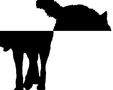

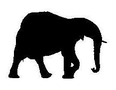
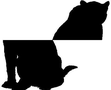


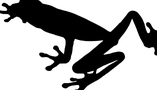

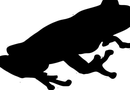
|
||
| .536 |
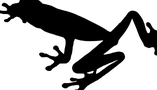
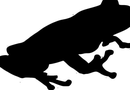
Baker2022frankenstein-accuracy_delta
v1
[reference]
rank 86
|
|
|
716 images 
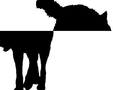

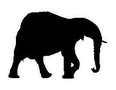
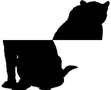



|
||
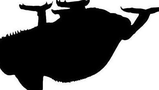
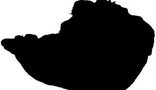
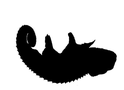
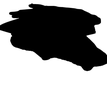
| .000 |
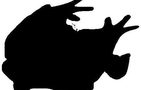
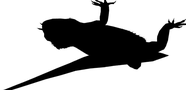
Baker2022inverted-accuracy_delta
v1
[reference]
rank 71
|
|
|
360 images 



|
||
| .162 |
BMD2024
rank 136
4 benchmarks |
|
| .104 |
BMD2024.dotted_1Behavioral-accuracy_distance
v1
rank 158
|
|
|
100 images 


|
||
| .126 |
BMD2024.dotted_2Behavioral-accuracy_distance
v1
rank 135
|
|
|
100 images 


|
||
| .186 |
BMD2024.texture_1Behavioral-accuracy_distance
v1
rank 118
|
|
|
100 images 


|
||
| .231 |
BMD2024.texture_2Behavioral-accuracy_distance
v1
rank 72
|
|
|
100 images 


|
||
| .520 |
Ferguson2024
[reference]
rank 82
14 benchmarks |
|
| .845 |
Ferguson2024circle_line-value_delta
v1
[reference]
rank 29
|
|
|
2_way_afc task
48 images 


|
||
| .650 |
Ferguson2024color-value_delta
v1
[reference]
rank 160
|
|
|
2_way_afc task
48 images 


|
||
| .627 |
Ferguson2024convergence-value_delta
v1
[reference]
rank 74
|
|
|
2_way_afc task
48 images 


|
||
| .220 |
Ferguson2024eighth-value_delta
v1
[reference]
rank 120
|
|
|
2_way_afc task
48 images 


|
||
| .288 |
Ferguson2024gray_easy-value_delta
v1
[reference]
rank 155
|
|
|
2_way_afc task
48 images 


|
||
| .167 |
Ferguson2024gray_hard-value_delta
v1
[reference]
rank 256
|
|
|
2_way_afc task
48 images 


|
||
| .942 |
Ferguson2024half-value_delta
v1
[reference]
rank 38
|
|
|
2_way_afc task
48 images 


|
||
| .706 |
Ferguson2024juncture-value_delta
v1
[reference]
rank 37
|
|
|
2_way_afc task
48 images 


|
||
| .305 |
Ferguson2024lle-value_delta
v1
[reference]
rank 184
|
|
|
2_way_afc task
48 images 


|
||
| .951 |
Ferguson2024llh-value_delta
v1
[reference]
rank 43
|
|
|
2_way_afc task
48 images 


|
||
| .095 |
Ferguson2024quarter-value_delta
v1
[reference]
rank 258
|
|
|
2_way_afc task
48 images 


|
||
| .255 |
Ferguson2024round_f-value_delta
v1
[reference]
rank 175
|
|
|
2_way_afc task
48 images 


|
||
| .230 |
Ferguson2024round_v-value_delta
v1
[reference]
rank 229
|
|
|
2_way_afc task
48 images 


|
||
| 1.0 |
Ferguson2024tilted_line-value_delta
v1
[reference]
rank 1
|
|
|
2_way_afc task
48 images 


|
||
| .490 |
Hebart2023-match
v1
rank 13
|
|
|
1854 images 


|
||
| .736 |
Maniquet2024
rank 40
2 benchmarks |
|
| .793 |
Maniquet2024-confusion_similarity
v1
[reference]
rank 53
|
|
|
13600 images 


|
||
| .679 |
Maniquet2024-tasks_consistency
v1
[reference]
rank 85
|
|
|
13600 images 


|
||
| .317 |
Coggan2024_behavior-ConditionWiseAccuracySimilarity
v1
rank 117
|
|
|
22560 images 


|
||
| .384 |
engineering_vision
rank 112
25 benchmarks |
|
| .704 |
ImageNet-top1
v1
[reference]
rank 129
|
|
|
50000 images 


|
||
| .407 |
ImageNet-C-top1
[reference]
rank 91
4 benchmarks |
|
| .381 |
ImageNet-C-noise-top1
v2
[reference]
rank 85
|
|


|
||
| .349 |
ImageNet-C-blur-top1
v2
[reference]
rank 97
|
|


|
||
| .410 |
ImageNet-C-weather-top1
v2
[reference]
rank 119
|
|


|
||
| .488 |
ImageNet-C-digital-top1
v2
[reference]
rank 98
|
|


|
||
| .543 |
Geirhos2021-top1
[reference]
rank 162
17 benchmarks |
|
| .963 |
Geirhos2021colour-top1
v1
[reference]
rank 157
|
|
|
640 images 


|
||
| .660 |
Geirhos2021contrast-top1
v1
[reference]
rank 194
|
|
|
800 images 


|
||
| .226 |
Geirhos2021cueconflict-top1
v1
[reference]
rank 120
|
|
|
1280 images 


|
||
| .169 |
Geirhos2021edge-top1
v1
[reference]
rank 249
|
|
|
160 images 


|
||
| .535 |
Geirhos2021eidolonI-top1
v1
[reference]
rank 81
|
|
|
800 images 


|
||
| .538 |
Geirhos2021eidolonII-top1
v1
[reference]
rank 130
|
|
|
640 images 


|
||
| .533 |
Geirhos2021eidolonIII-top1
v1
[reference]
rank 151
|
|
|
480 images 


|
||
| .939 |
Geirhos2021falsecolour-top1
v1
[reference]
rank 143
|
|
|
560 images 


|
||
| .248 |
Geirhos2021highpass-top1
v1
[reference]
rank 247
|
|
|
640 images 


|
||
| .453 |
Geirhos2021lowpass-top1
v1
[reference]
rank 116
|
|
|
800 images 


|
||
| .577 |
Geirhos2021phasescrambling-top1
v1
[reference]
rank 188
|
|
|
640 images 


|
||
| .709 |
Geirhos2021powerequalisation-top1
v1
[reference]
rank 146
|
|
|
560 images 


|
||
| .670 |
Geirhos2021rotation-top1
v1
[reference]
rank 157
|
|
|
960 images 


|
||
| .563 |
Geirhos2021silhouette-top1
v1
[reference]
rank 73
|
|
|
160 images 


|
||
| .603 |
Geirhos2021sketch-top1
v1
[reference]
rank 160
|
|
|
800 images 


|
||
| .404 |
Geirhos2021stylized-top1
v1
[reference]
rank 133
|
|
|
800 images 


|
||
| .440 |
Geirhos2021uniformnoise-top1
v1
[reference]
rank 158
|
|
|
800 images 


|
||
| .266 |
Hermann2020
[reference]
rank 120
2 benchmarks |
|
| .336 |
Hermann2020cueconflict-shape_bias
v1
[reference]
rank 118
|
|


|
||
| .195 |
Hermann2020cueconflict-shape_match
v1
[reference]
rank 111
|
|


|
||
How to use
from brainscore_vision import load_model
model = load_model("vonegrcnn_52e_full")
model.start_task(...)
model.start_recording(...)
model.look_at(...)
Brain Encoding Response Generator (BERG)
Through the BERG you can easily generate neural responses to images of your choice using any Brain-Score vision model.
For more information on how to use BERG, see the documentation and tutorial.
Historical Trend
Hover the line for a preview; click the chart to pin that month in the sidebar. While pinned, hover does not change it -- use Release or Esc to clear.
Benchmarks bibtex
@article {Marques2021.03.01.433495,
	author = {Marques, Tiago and Schrimpf, Martin and DiCarlo, James J.},
	title = {Multi-scale hierarchical neural network models that bridge from single neurons in the primate primary visual cortex to object recognition behavior},
	elocation-id = {2021.03.01.433495},
	year = {2021},
	doi = {10.1101/2021.03.01.433495},
	publisher = {Cold Spring Harbor Laboratory},
	abstract = {Primate visual object recognition relies on the representations in cortical areas at the top of the ventral stream that are computed by a complex, hierarchical network of neural populations. While recent work has created reasonably accurate image-computable hierarchical neural network models of those neural stages, those models do not yet bridge between the properties of individual neurons and the overall emergent behavior of the ventral stream. One reason we cannot yet do this is that individual artificial neurons in multi-stage models have not been shown to be functionally similar to individual biological neurons. Here, we took an important first step by building and evaluating hundreds of hierarchical neural network models in how well their artificial single neurons approximate macaque primary visual cortical (V1) neurons. We found that single neurons in certain models are surprisingly similar to their biological counterparts and that the distributions of single neuron properties, such as those related to orientation and spatial frequency tuning, approximately match those in macaque V1. Critically, we observed that hierarchical models with V1 stages that better match macaque V1 at the single neuron level are also more aligned with human object recognition behavior. Finally, we show that an optimized classical neuroscientific model of V1 is more functionally similar to primate V1 than all of the tested multi-stage models, suggesting room for further model improvements with tangible payoffs in closer alignment to human behavior. These results provide the first multi-stage, multi-scale models that allow our field to ask precisely how the specific properties of individual V1 neurons relate to recognition behavior.HighlightsImage-computable hierarchical neural network models can be naturally extended to create hierarchical {\textquotedblleft}brain models{\textquotedblright} that allow direct comparison with biological neural networks at multiple scales {\textendash} from single neurons, to population of neurons, to behavior.Single neurons in some of these hierarchical brain models are functionally similar to single neurons in macaque primate visual cortex (V1)Some hierarchical brain models have processing stages in which the entire distribution of artificial neuron properties closely matches the biological distributions of those same properties in macaque V1Hierarchical brain models whose V1 processing stages better match the macaque V1 stage also tend to be more aligned with human object recognition behavior at their output stageCompeting Interest StatementThe authors have declared no competing interest.},
	URL = {https://www.biorxiv.org/content/early/2021/08/13/2021.03.01.433495},
	eprint = {https://www.biorxiv.org/content/early/2021/08/13/2021.03.01.433495.full.pdf},
	journal = {bioRxiv}
}
        @article{Cavanaugh2002,
            author = {Cavanaugh, James R. and Bair, Wyeth and Movshon, J. A.},
            doi = {10.1152/jn.00692.2001},
            isbn = {0022-3077 (Print) 0022-3077 (Linking)},
            issn = {0022-3077},
            journal = {Journal of Neurophysiology},
            mendeley-groups = {Benchmark effects/Done,Benchmark effects/*Surround Suppression},
            number = {5},
            pages = {2530--2546},
            pmid = {12424292},
            title = {{Nature and Interaction of Signals From the Receptive Field Center and Surround in Macaque V1 Neurons}},
            url = {http://www.physiology.org/doi/10.1152/jn.00692.2001},
            volume = {88},
            year = {2002}
            }
        @article{Freeman2013,
            author = {Freeman, Jeremy and Ziemba, Corey M. and Heeger, David J. and Simoncelli, E. P. and Movshon, J. A.},
            doi = {10.1038/nn.3402},
            issn = {10976256},
            journal = {Nature Neuroscience},
            number = {7},
            pages = {974--981},
            pmid = {23685719},
            publisher = {Nature Publishing Group},
            title = {{A functional and perceptual signature of the second visual area in primates}},
            url = {http://dx.doi.org/10.1038/nn.3402},
            volume = {16},
            year = {2013}
            }
        @inproceedings{santurkar2019computer,
    title={Computer Vision with a Single (Robust) Classifier},
    author={Shibani Santurkar and Dimitris Tsipras and Brandon Tran and Andrew Ilyas and Logan Engstrom and Aleksander Madry},
    booktitle={ArXiv preprint arXiv:1906.09453},
    year={2019}
}
        @article {Rajalingham240614,
                author = {Rajalingham, Rishi and Issa, Elias B. and Bashivan, Pouya and Kar, Kohitij and Schmidt, Kailyn and DiCarlo, James J.},
                title = {Large-scale, high-resolution comparison of the core visual object recognition behavior of humans, monkeys, and state-of-the-art deep artificial neural networks},
                elocation-id = {240614},
                year = {2018},
                doi = {10.1101/240614},
                publisher = {Cold Spring Harbor Laboratory},
                abstract = {Primates{	extemdash}including humans{	extemdash}can typically recognize objects in visual images at a glance even in the face of naturally occurring identity-preserving image transformations (e.g. changes in viewpoint). A primary neuroscience goal is to uncover neuron-level mechanistic models that quantitatively explain this behavior by predicting primate performance for each and every image. Here, we applied this stringent behavioral prediction test to the leading mechanistic models of primate vision (specifically, deep, convolutional, artificial neural networks; ANNs) by directly comparing their behavioral signatures against those of humans and rhesus macaque monkeys. Using high-throughput data collection systems for human and monkey psychophysics, we collected over one million behavioral trials for 2400 images over 276 binary object discrimination tasks. Consistent with previous work, we observed that state-of-the-art deep, feed-forward convolutional ANNs trained for visual categorization (termed DCNNIC models) accurately predicted primate patterns of object-level confusion. However, when we examined behavioral performance for individual images within each object discrimination task, we found that all tested DCNNIC models were significantly non-predictive of primate performance, and that this prediction failure was not accounted for by simple image attributes, nor rescued by simple model modifications. These results show that current DCNNIC models cannot account for the image-level behavioral patterns of primates, and that new ANN models are needed to more precisely capture the neural mechanisms underlying primate object vision. To this end, large-scale, high-resolution primate behavioral benchmarks{	extemdash}such as those obtained here{	extemdash}could serve as direct guides for discovering such models.SIGNIFICANCE STATEMENT Recently, specific feed-forward deep convolutional artificial neural networks (ANNs) models have dramatically advanced our quantitative understanding of the neural mechanisms underlying primate core object recognition. In this work, we tested the limits of those ANNs by systematically comparing the behavioral responses of these models with the behavioral responses of humans and monkeys, at the resolution of individual images. Using these high-resolution metrics, we found that all tested ANN models significantly diverged from primate behavior. Going forward, these high-resolution, large-scale primate behavioral benchmarks could serve as direct guides for discovering better ANN models of the primate visual system.},
                URL = {https://www.biorxiv.org/content/early/2018/02/12/240614},
                eprint = {https://www.biorxiv.org/content/early/2018/02/12/240614.full.pdf},
                journal = {bioRxiv}
            }
        @article{geirhos2021partial,
              title={Partial success in closing the gap between human and machine vision},
              author={Geirhos, Robert and Narayanappa, Kantharaju and Mitzkus, Benjamin and Thieringer, Tizian and Bethge, Matthias and Wichmann, Felix A and Brendel, Wieland},
              journal={Advances in Neural Information Processing Systems},
              volume={34},
              year={2021},
              url={https://openreview.net/forum?id=QkljT4mrfs}
        }
        @article{BAKER2022104913,
                title = {Deep learning models fail to capture the configural nature of human shape perception},
                journal = {iScience},
                volume = {25},
                number = {9},
                pages = {104913},
                year = {2022},
                issn = {2589-0042},
                doi = {https://doi.org/10.1016/j.isci.2022.104913},
                url = {https://www.sciencedirect.com/science/article/pii/S2589004222011853},
                author = {Nicholas Baker and James H. Elder},
                keywords = {Biological sciences, Neuroscience, Sensory neuroscience},
                abstract = {Summary
                A hallmark of human object perception is sensitivity to the holistic configuration of the local shape features of an object. Deep convolutional neural networks (DCNNs) are currently the dominant models for object recognition processing in the visual cortex, but do they capture this configural sensitivity? To answer this question, we employed a dataset of animal silhouettes and created a variant of this dataset that disrupts the configuration of each object while preserving local features. While human performance was impacted by this manipulation, DCNN performance was not, indicating insensitivity to object configuration. Modifications to training and architecture to make networks more brain-like did not lead to configural processing, and none of the networks were able to accurately predict trial-by-trial human object judgements. We speculate that to match human configural sensitivity, networks must be trained to solve a broader range of object tasks beyond category recognition.}
        }
        @misc{ferguson_ngo_lee_dicarlo_schrimpf_2024,
         title={How Well is Visual Search Asymmetry predicted by a Binary-Choice, Rapid, Accuracy-based Visual-search, Oddball-detection (BRAVO) task?},
         url={osf.io/5ba3n},
         DOI={10.17605/OSF.IO/5BA3N},
         publisher={OSF},
         author={Ferguson, Michael E, Jr and Ngo, Jerry and Lee, Michael and DiCarlo, James and Schrimpf, Martin},
         year={2024},
         month={Jun}
}
        @article {Maniquet2024.04.02.587669,
	author = {Maniquet, Tim and de Beeck, Hans Op and Costantino, Andrea Ivan},
	title = {Recurrent issues with deep neural network models of visual recognition},
	elocation-id = {2024.04.02.587669},
	year = {2024},
	doi = {10.1101/2024.04.02.587669},
	publisher = {Cold Spring Harbor Laboratory},
	URL = {https://www.biorxiv.org/content/early/2024/04/10/2024.04.02.587669},
	eprint = {https://www.biorxiv.org/content/early/2024/04/10/2024.04.02.587669.full.pdf},
	journal = {bioRxiv}
}
        @INPROCEEDINGS{5206848,
                                                author={J. {Deng} and W. {Dong} and R. {Socher} and L. {Li} and  {Kai Li} and  {Li Fei-Fei}},
                                                booktitle={2009 IEEE Conference on Computer Vision and Pattern Recognition},
                                                title={ImageNet: A large-scale hierarchical image database},
                                                year={2009},
                                                volume={},
                                                number={},
                                                pages={248-255},
                                            }
        @ARTICLE{Hendrycks2019-di,
   title         = "Benchmarking Neural Network Robustness to Common Corruptions
                    and Perturbations",
   author        = "Hendrycks, Dan and Dietterich, Thomas",
   abstract      = "In this paper we establish rigorous benchmarks for image
                    classifier robustness. Our first benchmark, ImageNet-C,
                    standardizes and expands the corruption robustness topic,
                    while showing which classifiers are preferable in
                    safety-critical applications. Then we propose a new dataset
                    called ImageNet-P which enables researchers to benchmark a
                    classifier's robustness to common perturbations. Unlike
                    recent robustness research, this benchmark evaluates
                    performance on common corruptions and perturbations not
                    worst-case adversarial perturbations. We find that there are
                    negligible changes in relative corruption robustness from
                    AlexNet classifiers to ResNet classifiers. Afterward we
                    discover ways to enhance corruption and perturbation
                    robustness. We even find that a bypassed adversarial defense
                    provides substantial common perturbation robustness.
                    Together our benchmarks may aid future work toward networks
                    that robustly generalize.",
   month         =  mar,
   year          =  2019,
   archivePrefix = "arXiv",
   primaryClass  = "cs.LG",
   eprint        = "1903.12261",
   url           = "https://arxiv.org/abs/1903.12261"
}
        @article{hermann2020origins,
              title={The origins and prevalence of texture bias in convolutional neural networks},
              author={Hermann, Katherine and Chen, Ting and Kornblith, Simon},
              journal={Advances in Neural Information Processing Systems},
              volume={33},
              pages={19000--19015},
              year={2020},
              url={https://proceedings.neurips.cc/paper/2020/hash/db5f9f42a7157abe65bb145000b5871a-Abstract.html}
        }