









Scores on benchmarks
from scoring API| .436 |
average_vision
rank 6
138 benchmarks |
|
| .332 |
neural_vision
rank 46
77 benchmarks |
|
| .422 |
V1
rank 29
33 benchmarks |
|
| .354 |
Allen2022_fmri_surface.V1
rank 50
2 benchmarks |
|
| .214 |
Allen2022_fmri_surface.V1-rdm
v1
[reference]
rank 71
|
|


|
||
| .494 |
Allen2022_fmri_surface.V1-ridge
v1
[reference]
rank 32
|
|


|
||
| .213 |
FreemanZiemba2013.V1-pls
v3
[reference]
rank 364
|
|
|
recordings from
102
sites in
V1
315 images 


|
||
| .610 |
Hebart2023_fmri.V1-ridgecv
v3
rank 34
|
|


|
||
| .310 |
Li2026.V1
rank 36
2 benchmarks |
|
| .251 |
Li2026.V1-rdm
v1
[reference]
rank 25
|
|


|
||
| .369 |
Li2026.V1-ridgecv
v1
[reference]
rank 62
|
|


|
||
| .707 |
Marques2020
[reference]
rank 205
22 benchmarks |
|
| .945 |
V1-orientation
rank 7
7 benchmarks |
|
| .963 |
Marques2020_DeValois1982-pref_or
v1
rank 148
|
|
|
1152 images 


|
||
| .909 |
Marques2020_Ringach2002-circular_variance
v1
rank 62
|
|
|
1152 images 


|
||
| .925 |
Marques2020_Ringach2002-cv_bandwidth_ratio
v1
rank 49
|
|
|
1152 images 


|
||
| .989 |
Marques2020_Ringach2002-opr_cv_diff
v1
rank 2
|
|
|
1152 images 


|
||
| .950 |
Marques2020_Ringach2002-or_bandwidth
v1
rank 16
|
|
|
1152 images 


|
||
| .966 |
Marques2020_Ringach2002-or_selective
v1
rank 175
|
|
|
1152 images 


|
||
| .911 |
Marques2020_Ringach2002-orth_pref_ratio
v1
rank 51
|
|
|
1152 images 


|
||
| .698 |
V1-receptive_field_size
rank 136
2 benchmarks |
|
| .590 |
Marques2020_Cavanaugh2002-grating_summation_field
v1
[reference]
rank 296
|
|
|
2304 images 


|
||
| .807 |
Marques2020_Cavanaugh2002-surround_diameter
v1
[reference]
rank 39
|
|
|
2304 images 


|
||
| .908 |
V1-response_magnitude
rank 116
3 benchmarks |
|
| .903 |
Marques2020_FreemanZiemba2013-max_noise
v1
[reference]
rank 79
|
|
|
450 images 


|
||
| .846 |
Marques2020_FreemanZiemba2013-max_texture
v1
[reference]
rank 231
|
|
|
450 images 


|
||
| .973 |
Marques2020_Ringach2002-max_dc
v1
rank 109
|
|
|
1152 images 


|
||
| .681 |
V1-response_selectivity
rank 142
4 benchmarks |
|
| .841 |
Marques2020_FreemanZiemba2013-texture_selectivity
v1
[reference]
rank 59
|
|
|
450 images 


|
||
| .680 |
Marques2020_FreemanZiemba2013-texture_sparseness
v1
[reference]
rank 235
|
|
|
450 images 


|
||
| .749 |
Marques2020_FreemanZiemba2013-texture_variance_ratio
v1
[reference]
rank 173
|
|
|
450 images 


|
||
| .452 |
Marques2020_Ringach2002-modulation_ratio
v1
rank 260
|
|
|
1152 images 


|
||
| .535 |
V1-spatial_frequency
rank 403
3 benchmarks |
|
| .529 |
Marques2020_DeValois1982-peak_sf
v1
rank 359
|
|
|
2112 images 


|
||
| .664 |
Marques2020_Schiller1976-sf_bandwidth
v1
[reference]
rank 358
|
|
|
2112 images 


|
||
| .413 |
Marques2020_Schiller1976-sf_selective
v1
[reference]
rank 414
|
|
|
2112 images 


|
||
| .615 |
V1-surround_modulation
rank 232
1 benchmark |
|
| .615 |
Marques2020_Cavanaugh2002-surround_suppression_index
v1
[reference]
rank 232
|
|
|
2304 images 


|
||
| .571 |
V1-texture_modulation
rank 300
2 benchmarks |
|
| .452 |
Marques2020_FreemanZiemba2013-abs_texture_modulation_index
v1
[reference]
rank 311
|
|
|
450 images 


|
||
| .689 |
Marques2020_FreemanZiemba2013-texture_modulation_index
v1
[reference]
rank 277
|
|
|
450 images 


|
||
| .809 |
Papale2025.V1-ridgecv
v3
[reference]
rank 10
|
|


|
||
| .027 |
Coggan2024_fMRI.V1-rdm
v1
rank 213
|
|
|
24 images 


|
||
| .344 |
Zerbe2026_fmri.V1
[reference]
rank 41
3 benchmarks |
|
| .330 |
Zerbe2026_fmri.V1-ood-ridgecv
v1
[reference]
rank 85
|
|


|
||
| .243 |
Zerbe2026_fmri.V1-rdm-pearson
v1
[reference]
rank 54
|
|


|
||
| .458 |
Zerbe2026_fmri.V1-tau-ridgecv
v1
[reference]
rank 27
|
|


|
||
| .278 |
V2
rank 102
10 benchmarks |
|
| .338 |
Allen2022_fmri_surface.V2
rank 78
2 benchmarks |
|
| .209 |
Allen2022_fmri_surface.V2-rdm
v1
[reference]
rank 103
|
|


|
||
| .468 |
Allen2022_fmri_surface.V2-ridge
v1
[reference]
rank 68
|
|


|
||
| .253 |
FreemanZiemba2013.V2-pls
v3
[reference]
rank 206
|
|
|
recordings from
103
sites in
V2
315 images 


|
||
| .550 |
Hebart2023_fmri.V2-ridgecv
v3
rank 106
|
|


|
||
| .109 |
Li2026.V2
rank 141
2 benchmarks |
|
| .048 |
Li2026.V2-rdm
v1
[reference]
rank 95
|
|


|
||
| .169 |
Li2026.V2-ridgecv
v1
[reference]
rank 140
|
|


|
||
| .107 |
Coggan2024_fMRI.V2-rdm
v1
rank 116
|
|
|
24 images 


|
||
| .308 |
Zerbe2026_fmri.V2
[reference]
rank 84
3 benchmarks |
|
| .358 |
Zerbe2026_fmri.V2-ood-ridgecv
v1
[reference]
rank 62
|
|


|
||
| .188 |
Zerbe2026_fmri.V2-rdm-pearson
v1
[reference]
rank 94
|
|


|
||
| .380 |
Zerbe2026_fmri.V2-tau-ridgecv
v1
[reference]
rank 90
|
|


|
||
| .290 |
V4
rank 89
16 benchmarks |
|
| .255 |
Allen2022_fmri_surface.V4
rank 120
2 benchmarks |
|
| .152 |
Allen2022_fmri_surface.V4-rdm
v1
[reference]
rank 127
|
|


|
||
| .359 |
Allen2022_fmri_surface.V4-ridge
v1
[reference]
rank 110
|
|


|
||
| .259 |
Cowley2026.V4-pls
v1
[reference]
rank 108
|
|


|
||
| .270 |
Hebart2023_fmri.V4-ridgecv
v3
rank 127
|
|


|
||
| .111 |
Li2026.V4
rank 84
2 benchmarks |
|
| .079 |
Li2026.V4-rdm
v1
[reference]
rank 88
|
|


|
||
| .143 |
Li2026.V4-ridgecv
v1
[reference]
rank 95
|
|


|
||
| .016 |
MajajHong2015public.V4-reverse_pls
v4
[reference]
rank 116
|
|


|
||
| .530 |
MajajHong2015.V4-pls
v4
[reference]
rank 79
|
|
|
recordings from
88
sites in
V4
2560 images 


|
||
| .541 |
Papale2025.V4-ridgecv
v3
[reference]
rank 87
|
|


|
||
| .547 |
Sanghavi2020.V4-pls
v2
[reference]
rank 262
|
|
|
recordings from
47
sites in
V4
5760 images 


|
||
| .442 |
SanghaviJozwik2020.V4-pls
v2
[reference]
rank 268
|
|
|
recordings from
50
sites in
V4
4916 images 


|
||
| .217 |
SanghaviMurty2020.V4-pls
v2
[reference]
rank 142
|
|
|
recordings from
46
sites in
V4
300 images 


|
||
| .021 |
Coggan2024_fMRI.V4-rdm
v1
rank 186
|
|
|
24 images 


|
||
| .269 |
Zerbe2026_fmri.V4
[reference]
rank 97
3 benchmarks |
|
| .354 |
Zerbe2026_fmri.V4-ood-ridgecv
v1
[reference]
rank 106
|
|


|
||
| .143 |
Zerbe2026_fmri.V4-rdm-pearson
v1
[reference]
rank 98
|
|


|
||
| .310 |
Zerbe2026_fmri.V4-tau-ridgecv
v1
[reference]
rank 90
|
|


|
||
| .340 |
IT
rank 28
18 benchmarks |
|
| .428 |
Allen2022_fmri_surface.IT
rank 30
2 benchmarks |
|
| .366 |
Allen2022_fmri_surface.IT-rdm
v1
[reference]
rank 21
|
|


|
||
| .491 |
Allen2022_fmri_surface.IT-ridge
v1
[reference]
rank 53
|
|


|
||
| .253 |
Bracci2019.anteriorVTC-rdm
v1
rank 150
|
|
|
27 images 


|
||
| .269 |
Gifford2022.IT-ridgecv
v3
[reference]
rank 6
|
|


|
||
| .333 |
Hebart2023_fmri.IT-ridgecv
v3
rank 19
|
|


|
||
| .305 |
Li2026.IT
rank 66
2 benchmarks |
|
| .362 |
Li2026.IT-rdm
v1
[reference]
rank 75
|
|


|
||
| .247 |
Li2026.IT-ridgecv
v1
[reference]
rank 39
|
|


|
||
| .434 |
MajajHong2015.IT-pls
v4
[reference]
rank 170
|
|
|
recordings from
168
sites in
IT
2560 images 


|
||
| .080 |
MajajHong2015public.IT-reverse_pls
v4
[reference]
rank 47
|
|


|
||
| .574 |
Papale2025.IT-ridgecv
v3
[reference]
rank 34
|
|


|
||
| .469 |
Sanghavi2020.IT-pls
v2
[reference]
rank 76
|
|
|
recordings from
88
sites in
IT
5760 images 


|
||
| .426 |
SanghaviJozwik2020.IT-pls
v2
[reference]
rank 193
|
|
|
recordings from
26
sites in
IT
4916 images 


|
||
| .331 |
SanghaviMurty2020.IT-pls
v2
[reference]
rank 141
|
|
|
recordings from
29
sites in
IT
300 images 


|
||
| .554 |
Coggan2024_fMRI.IT-rdm
v1
rank 69
|
|
|
24 images 


|
||
| .307 |
Zerbe2026_fmri.IT
[reference]
rank 25
3 benchmarks |
|
| .228 |
Zerbe2026_fmri.IT-ood-ridgecv
v1
[reference]
rank 31
|
|


|
||
| .371 |
Zerbe2026_fmri.IT-rdm-pearson
v1
[reference]
rank 42
|
|


|
||
| .323 |
Zerbe2026_fmri.IT-tau-ridgecv
v1
[reference]
rank 10
|
|


|
||
| .540 |
behavior_vision
rank 16
61 benchmarks |
|
| .528 |
Rajalingham2018-i2n
v2
[reference]
rank 115
|
|
|
match-to-sample task
240 images 


|
||
| .595 |
Geirhos2021-error_consistency
[reference]
rank 16
17 benchmarks |
|
| .422 |
Geirhos2021colour-error_consistency
v1
[reference]
rank 125
|
|
|
640 images 


|
||
| .349 |
Geirhos2021contrast-error_consistency
v1
[reference]
rank 81
|
|
|
800 images 


|
||
| .686 |
Geirhos2021cueconflict-error_consistency
v1
[reference]
rank 22
|
|
|
1280 images 


|
||
| 1.0 |
Geirhos2021edge-error_consistency
v1
[reference]
rank 1
|
|
|
160 images 


|
||
| .472 |
Geirhos2021eidolonI-error_consistency
v1
[reference]
rank 90
|
|
|
800 images 


|
||
| .555 |
Geirhos2021eidolonII-error_consistency
v1
[reference]
rank 53
|
|
|
640 images 


|
||
| .511 |
Geirhos2021eidolonIII-error_consistency
v1
[reference]
rank 36
|
|
|
480 images 


|
||
| .256 |
Geirhos2021falsecolour-error_consistency
v1
[reference]
rank 180
|
|
|
560 images 


|
||
| .709 |
Geirhos2021highpass-error_consistency
v1
[reference]
rank 14
|
|
|
640 images 


|
||
| .516 |
Geirhos2021lowpass-error_consistency
v1
[reference]
rank 36
|
|
|
800 images 


|
||
| .621 |
Geirhos2021phasescrambling-error_consistency
v1
[reference]
rank 6
|
|
|
640 images 


|
||
| .586 |
Geirhos2021powerequalisation-error_consistency
v1
[reference]
rank 26
|
|
|
560 images 


|
||
| .476 |
Geirhos2021rotation-error_consistency
v1
[reference]
rank 29
|
|
|
960 images 


|
||
| .966 |
Geirhos2021silhouette-error_consistency
v1
[reference]
rank 18
|
|
|
160 images 


|
||
| .658 |
Geirhos2021sketch-error_consistency
v1
[reference]
rank 20
|
|
|
800 images 


|
||
| .750 |
Geirhos2021stylized-error_consistency
v1
[reference]
rank 13
|
|
|
800 images 


|
||
| .576 |
Geirhos2021uniformnoise-error_consistency
v1
[reference]
rank 43
|
|
|
800 images 


|
||
| .616 |
Baker2022
rank 42
3 benchmarks |
|
| .438 |
Baker2022fragmented-accuracy_delta
v1
[reference]
rank 127
|
|
|
716 images 
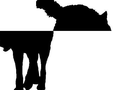

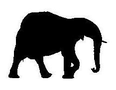
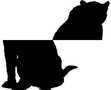





|
||
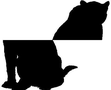
| .713 |
Baker2022frankenstein-accuracy_delta
v1
[reference]
rank 56
|
|
|
716 images 
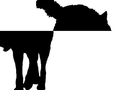






|
||
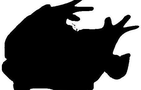
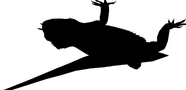
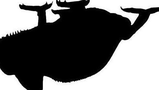
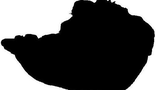
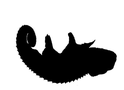
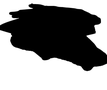
| .698 |
Baker2022inverted-accuracy_delta
v1
[reference]
rank 38
|
|
|
360 images 



|
||
| .564 |
BMD2024
rank 18
4 benchmarks |
|
| .582 |
BMD2024.dotted_1Behavioral-accuracy_distance
v1
rank 18
|
|
|
100 images 


|
||
| .465 |
BMD2024.dotted_2Behavioral-accuracy_distance
v1
rank 9
|
|
|
100 images 


|
||
| .600 |
BMD2024.texture_1Behavioral-accuracy_distance
v1
rank 21
|
|
|
100 images 


|
||
| .609 |
BMD2024.texture_2Behavioral-accuracy_distance
v1
rank 18
|
|
|
100 images 


|
||
| .558 |
Ferguson2024
[reference]
rank 60
14 benchmarks |
|
| .573 |
Ferguson2024circle_line-value_delta
v1
[reference]
rank 62
|
|
|
2_way_afc task
48 images 


|
||
| 1.0 |
Ferguson2024color-value_delta
v1
[reference]
rank 1
|
|
|
2_way_afc task
48 images 


|
||
| .839 |
Ferguson2024convergence-value_delta
v1
[reference]
rank 41
|
|
|
2_way_afc task
48 images 


|
||
| .296 |
Ferguson2024eighth-value_delta
v1
[reference]
rank 103
|
|
|
2_way_afc task
48 images 


|
||
| .541 |
Ferguson2024gray_easy-value_delta
v1
[reference]
rank 103
|
|
|
2_way_afc task
48 images 


|
||
| .437 |
Ferguson2024gray_hard-value_delta
v1
[reference]
rank 166
|
|
|
2_way_afc task
48 images 


|
||
| .383 |
Ferguson2024half-value_delta
v1
[reference]
rank 195
|
|
|
2_way_afc task
48 images 


|
||
| .848 |
Ferguson2024juncture-value_delta
v1
[reference]
rank 25
|
|
|
2_way_afc task
48 images 


|
||
| .411 |
Ferguson2024lle-value_delta
v1
[reference]
rank 157
|
|
|
2_way_afc task
48 images 


|
||
| .068 |
Ferguson2024llh-value_delta
v1
[reference]
rank 292
|
|
|
2_way_afc task
48 images 


|
||
| .379 |
Ferguson2024quarter-value_delta
v1
[reference]
rank 150
|
|
|
2_way_afc task
48 images 


|
||
| .961 |
Ferguson2024round_f-value_delta
v1
[reference]
rank 21
|
|
|
2_way_afc task
48 images 


|
||
| .417 |
Ferguson2024round_v-value_delta
v1
[reference]
rank 172
|
|
|
2_way_afc task
48 images 


|
||
| .657 |
Ferguson2024tilted_line-value_delta
v1
[reference]
rank 124
|
|
|
2_way_afc task
48 images 


|
||
| .257 |
Hebart2023-match
v1
rank 173
|
|
|
1854 images 


|
||
| .574 |
Kato2026
rank 33
18 benchmarks |
|
| .440 |
Kato2026-error_consistency
rank 38
9 benchmarks |
|
| .306 |
Kato2026Ori-error_consistency
v1
rank 108
|
|


|
||
| .392 |
Kato2026Fil-error_consistency
v1
rank 128
|
|


|
||
| .622 |
Kato2026Lin-error_consistency
v1
rank 28
|
|


|
||
| .492 |
Kato2026SilTex-error_consistency
v1
rank 42
|
|


|
||
| .649 |
Kato2026Sil-error_consistency
v1
rank 28
|
|


|
||
| .871 |
Kato2026Tex-error_consistency
v1
rank 32
|
|


|
||
| .561 |
Kato2026LinFil-error_consistency
v1
rank 30
|
|


|
||
| .018 |
Kato2026Sparse-error_consistency
v1
rank 30
|
|


|
||
| .045 |
Kato2026Dense-error_consistency
v1
rank 50
|
|


|
||
| .708 |
Kato2026-accuracy_distance
rank 30
9 benchmarks |
|
| 1.0 |
Kato2026Ori-accuracy_distance
v1
rank 1
|
|


|
||
| .800 |
Kato2026Fil-accuracy_distance
v1
rank 125
|
|


|
||
| .838 |
Kato2026Lin-accuracy_distance
v1
rank 31
|
|


|
||
| .738 |
Kato2026SilTex-accuracy_distance
v1
rank 47
|
|


|
||
| .587 |
Kato2026Sil-accuracy_distance
v1
rank 34
|
|


|
||
| 1.0 |
Kato2026Tex-accuracy_distance
v1
rank 1
|
|


|
||
| 1.0 |
Kato2026LinFil-accuracy_distance
v1
rank 1
|
|


|
||
| .217 |
Kato2026Sparse-accuracy_distance
v1
rank 40
|
|


|
||
| .188 |
Kato2026Dense-accuracy_distance
v1
rank 36
|
|


|
||
| .509 |
Maniquet2024
rank 180
2 benchmarks |
|
| .270 |
Maniquet2024-confusion_similarity
v1
[reference]
rank 261
|
|
|
13600 images 


|
||
| .747 |
Maniquet2024-tasks_consistency
v1
[reference]
rank 8
|
|
|
13600 images 


|
||
| .660 |
Coggan2024_behavior-ConditionWiseAccuracySimilarity
v1
rank 8
|
|
|
22560 images 


|
||
| .499 |
engineering_vision
rank 25
25 benchmarks |
|
| .841 |
ImageNet-top1
v1
[reference]
rank 16
|
|
|
50000 images 


|
||
| .620 |
ImageNet-C-top1
[reference]
rank 17
4 benchmarks |
|
| .597 |
ImageNet-C-noise-top1
v2
[reference]
rank 23
|
|


|
||
| .525 |
ImageNet-C-blur-top1
v2
[reference]
rank 18
|
|


|
||
| .681 |
ImageNet-C-weather-top1
v2
[reference]
rank 12
|
|


|
||
| .677 |
ImageNet-C-digital-top1
v2
[reference]
rank 15
|
|


|
||
| .750 |
Geirhos2021-top1
[reference]
rank 27
17 benchmarks |
|
| .997 |
Geirhos2021colour-top1
v1
[reference]
rank 10
|
|
|
640 images 


|
||
| .990 |
Geirhos2021contrast-top1
v1
[reference]
rank 26
|
|
|
800 images 


|
||
| .281 |
Geirhos2021cueconflict-top1
v1
[reference]
rank 72
|
|
|
1280 images 


|
||
| .863 |
Geirhos2021edge-top1
v1
[reference]
rank 19
|
|
|
160 images 


|
||
| .519 |
Geirhos2021eidolonI-top1
v1
[reference]
rank 118
|
|
|
800 images 


|
||
| .556 |
Geirhos2021eidolonII-top1
v1
[reference]
rank 99
|
|
|
640 images 


|
||
| .590 |
Geirhos2021eidolonIII-top1
v1
[reference]
rank 83
|
|
|
480 images 


|
||
| .993 |
Geirhos2021falsecolour-top1
v1
[reference]
rank 18
|
|
|
560 images 


|
||
| .927 |
Geirhos2021highpass-top1
v1
[reference]
rank 21
|
|
|
640 images 


|
||
| .558 |
Geirhos2021lowpass-top1
v1
[reference]
rank 38
|
|
|
800 images 


|
||
| .805 |
Geirhos2021phasescrambling-top1
v1
[reference]
rank 37
|
|
|
640 images 


|
||
| .936 |
Geirhos2021powerequalisation-top1
v1
[reference]
rank 29
|
|
|
560 images 


|
||
| .922 |
Geirhos2021rotation-top1
v1
[reference]
rank 24
|
|
|
960 images 


|
||
| .638 |
Geirhos2021silhouette-top1
v1
[reference]
rank 34
|
|
|
160 images 


|
||
| .925 |
Geirhos2021sketch-top1
v1
[reference]
rank 15
|
|
|
800 images 


|
||
| .561 |
Geirhos2021stylized-top1
v1
[reference]
rank 48
|
|
|
800 images 


|
||
| .686 |
Geirhos2021uniformnoise-top1
v1
[reference]
rank 42
|
|
|
800 images 


|
||
| .285 |
Hermann2020
[reference]
rank 95
2 benchmarks |
|
| .325 |
Hermann2020cueconflict-shape_bias
v1
[reference]
rank 132
|
|


|
||
| .244 |
Hermann2020cueconflict-shape_match
v1
[reference]
rank 71
|
|


|
||
How to use
from brainscore_vision import load_model
model = load_model("convnext_base:clip_laiona_augreg_ft_in1k_384")
model.start_task(...)
model.start_recording(...)
model.look_at(...)
Intended use and limits
Recommended applications
- Image classification
- feature/embedding extraction
- backbone for downstream vision tasks (classification head
- feature maps
- or pooled embeddings all supported)
Target users
Probable: show confidence source
Probable — curation workbook
Probable: show confidence source
Probable — curation workbook- ML engineers/researchers needing a strong ImageNet classifier or general-purpose visual feature extractor
Known limitations
Not documented
Biases
Not documented
Brain Encoding Response Generator (BERG)
Through the BERG you can easily generate neural responses to images of your choice using any Brain-Score vision model.
For more information on how to use BERG, see the documentation and tutorial.
Historical trend
Hover the line for a preview; click the chart to pin that month in the sidebar. While pinned, hover does not change it -- use Release or Esc to clear.
Benchmarks BibTeX
@article{allen_massive_2022,
    title = {A massive 7T fMRI dataset to bridge cognitive neuroscience and artificial intelligence},
    volume = {25},
    issn = {1097-6256},
    doi = {10.1038/s41593-021-00962-x},
    journal = {Nature Neuroscience},
    author = {Allen, Emily J. and St-Yves, Ghislain and Wu, Yihan and Breedlove, Jesse L.
              and Prince, Jacob S. and Dowdle, Logan T. and Nau, Matthias and Caron, Brad
              and Pestilli, Franco and Charest, Ian and Hutchinson, J. Benjamin
              and Naselaris, Thomas and Kay, Kendrick},
    year = {2022},
    pages = {116--126},
}
        @Article{Freeman2013,
                author={Freeman, Jeremy
                and Ziemba, Corey M.
                and Heeger, David J.
                and Simoncelli, Eero P.
                and Movshon, J. Anthony},
                title={A functional and perceptual signature of the second visual area in primates},
                journal={Nature Neuroscience},
                year={2013},
                month={Jul},
                day={01},
                volume={16},
                number={7},
                pages={974-981},
                abstract={The authors examined neuronal responses in V1 and V2 to synthetic texture stimuli that replicate higher-order statistical dependencies found in natural images. V2, but not V1, responded differentially to these textures, in both macaque (single neurons) and human (fMRI). Human detection of naturalistic structure in the same images was predicted by V2 responses, suggesting a role for V2 in representing natural image structure.},
                issn={1546-1726},
                doi={10.1038/nn.3402},
                url={https://doi.org/10.1038/nn.3402}
                }
        @article{li2026triplen,
    title = {Triple-N dataset: large-scale fMRI-guided dense recordings of nonhuman
             primate neural responses to natural scenes},
    author = {Li, Yipeng and Liu, Xieyi and Li, Wanru and Yang, Jia and Gong, Baoqi
              and Jin, Wei and Gong, Zhengxin and Wang, Kesheng and Luo, Jingqiu
              and Zhao, Zishuo and Bao, Pinglei},
    journal = {Nature Neuroscience},
    year = {2026},
    doi = {10.1038/s41593-026-02322-z},
    url = {https://doi.org/10.1038/s41593-026-02322-z},
}
        @article {Marques2021.03.01.433495,
	author = {Marques, Tiago and Schrimpf, Martin and DiCarlo, James J.},
	title = {Multi-scale hierarchical neural network models that bridge from single neurons in the primate primary visual cortex to object recognition behavior},
	elocation-id = {2021.03.01.433495},
	year = {2021},
	doi = {10.1101/2021.03.01.433495},
	publisher = {Cold Spring Harbor Laboratory},
	abstract = {Primate visual object recognition relies on the representations in cortical areas at the top of the ventral stream that are computed by a complex, hierarchical network of neural populations. While recent work has created reasonably accurate image-computable hierarchical neural network models of those neural stages, those models do not yet bridge between the properties of individual neurons and the overall emergent behavior of the ventral stream. One reason we cannot yet do this is that individual artificial neurons in multi-stage models have not been shown to be functionally similar to individual biological neurons. Here, we took an important first step by building and evaluating hundreds of hierarchical neural network models in how well their artificial single neurons approximate macaque primary visual cortical (V1) neurons. We found that single neurons in certain models are surprisingly similar to their biological counterparts and that the distributions of single neuron properties, such as those related to orientation and spatial frequency tuning, approximately match those in macaque V1. Critically, we observed that hierarchical models with V1 stages that better match macaque V1 at the single neuron level are also more aligned with human object recognition behavior. Finally, we show that an optimized classical neuroscientific model of V1 is more functionally similar to primate V1 than all of the tested multi-stage models, suggesting room for further model improvements with tangible payoffs in closer alignment to human behavior. These results provide the first multi-stage, multi-scale models that allow our field to ask precisely how the specific properties of individual V1 neurons relate to recognition behavior.HighlightsImage-computable hierarchical neural network models can be naturally extended to create hierarchical {\textquotedblleft}brain models{\textquotedblright} that allow direct comparison with biological neural networks at multiple scales {\textendash} from single neurons, to population of neurons, to behavior.Single neurons in some of these hierarchical brain models are functionally similar to single neurons in macaque primate visual cortex (V1)Some hierarchical brain models have processing stages in which the entire distribution of artificial neuron properties closely matches the biological distributions of those same properties in macaque V1Hierarchical brain models whose V1 processing stages better match the macaque V1 stage also tend to be more aligned with human object recognition behavior at their output stageCompeting Interest StatementThe authors have declared no competing interest.},
	URL = {https://www.biorxiv.org/content/early/2021/08/13/2021.03.01.433495},
	eprint = {https://www.biorxiv.org/content/early/2021/08/13/2021.03.01.433495.full.pdf},
	journal = {bioRxiv}
}
        @article{Cavanaugh2002,
            author = {Cavanaugh, James R. and Bair, Wyeth and Movshon, J. A.},
            doi = {10.1152/jn.00692.2001},
            isbn = {0022-3077 (Print) 0022-3077 (Linking)},
            issn = {0022-3077},
            journal = {Journal of Neurophysiology},
            mendeley-groups = {Benchmark effects/Done,Benchmark effects/*Surround Suppression},
            number = {5},
            pages = {2530--2546},
            pmid = {12424292},
            title = {{Nature and Interaction of Signals From the Receptive Field Center and Surround in Macaque V1 Neurons}},
            url = {http://www.physiology.org/doi/10.1152/jn.00692.2001},
            volume = {88},
            year = {2002}
            }
        @article{Freeman2013,
            author = {Freeman, Jeremy and Ziemba, Corey M. and Heeger, David J. and Simoncelli, E. P. and Movshon, J. A.},
            doi = {10.1038/nn.3402},
            issn = {10976256},
            journal = {Nature Neuroscience},
            number = {7},
            pages = {974--981},
            pmid = {23685719},
            publisher = {Nature Publishing Group},
            title = {{A functional and perceptual signature of the second visual area in primates}},
            url = {http://dx.doi.org/10.1038/nn.3402},
            volume = {16},
            year = {2013}
            }
        @article{Schiller1976,
            author = {Schiller, P. H. and Finlay, B. L. and Volman, S. F.},
            doi = {10.1152/jn.1976.39.6.1352},
            issn = {0022-3077},
            journal = {Journal of neurophysiology},
            number = {6},
            pages = {1334--1351},
            pmid = {825624},
            title = {{Quantitative studies of single-cell properties in monkey striate cortex. III. Spatial Frequency}},
            url = {http://www.ncbi.nlm.nih.gov/pubmed/825624},
            volume = {39},
            year = {1976}
            }
        @article{papale_extensive_2025,
	title = {An extensive dataset of spiking activity to reveal the syntax of the ventral stream},
	volume = {113},
	issn = {08966273},
	url = {https://linkinghub.elsevier.com/retrieve/pii/S089662732400881X},
	doi = {10.1016/j.neuron.2024.12.003},
	journal = {Neuron},
	author = {Papale, Paolo and Wang, Feng and Self, Matthew W. and Roelfsema, Pieter R.},
	year = {2025},
}
        @inproceedings{santurkar2019computer,
    title={Computer Vision with a Single (Robust) Classifier},
    author={Shibani Santurkar and Dimitris Tsipras and Brandon Tran and Andrew Ilyas and Logan Engstrom and Aleksander Madry},
    booktitle={ArXiv preprint arXiv:1906.09453},
    year={2019}
}
        @inproceedings{zerbe_laion-fmri_2026,
      title = {{LAION}-{fMRI}: A densely sampled 7T-fMRI dataset providing broad coverage of natural image diversity},
      author = {Zerbe, Josefine and Roth, Johannes and Mell, Maggie Mae and Herholz, Peer and Knapen, Tomas and Hebart, Martin N.},
      year = {2026},
      booktitle = {Vision Sciences Society Annual Meeting},
  }
        @article{cowley2026compact,
    title={Compact deep neural network models of the visual cortex},
    author={Cowley, Benjamin R and Stan, Patricia L and Pillow, Jonathan W and Smith, Matthew A},
    journal={Nature},
    volume={652},
    number={8111},
    pages={947--954},
    year={2026},
    publisher={Nature Publishing Group},
    doi={10.1038/s41586-026-10150-1},
    url={https://doi.org/10.1038/s41586-026-10150-1}}
        @article{muzellec_reverse_2026,
      title = {Reverse predictivity for bidirectional comparison of neural networks and biological brains},
      volume = {8},
      issn = {2522-5839},
      url = {https://doi.org/10.1038/s42256-026-01204-0},
      doi = {10.1038/s42256-026-01204-0},
      number = {3},
      journal = {Nature Machine Intelligence},
      author = {Muzellec, Sabine and Kar, Kohitij},
      month = mar,
      year = {2026},
      pages = {474--488},
}
        @article {Majaj13402,
            author = {Majaj, Najib J. and Hong, Ha and Solomon, Ethan A. and DiCarlo, James J.},
            title = {Simple Learned Weighted Sums of Inferior Temporal Neuronal Firing Rates Accurately Predict Human Core Object Recognition Performance},
            volume = {35},
            number = {39},
            pages = {13402--13418},
            year = {2015},
            doi = {10.1523/JNEUROSCI.5181-14.2015},
            publisher = {Society for Neuroscience},
            abstract = {To go beyond qualitative models of the biological substrate of object recognition, we ask: can a single ventral stream neuronal linking hypothesis quantitatively account for core object recognition performance over a broad range of tasks? We measured human performance in 64 object recognition tests using thousands of challenging images that explore shape similarity and identity preserving object variation. We then used multielectrode arrays to measure neuronal population responses to those same images in visual areas V4 and inferior temporal (IT) cortex of monkeys and simulated V1 population responses. We tested leading candidate linking hypotheses and control hypotheses, each postulating how ventral stream neuronal responses underlie object recognition behavior. Specifically, for each hypothesis, we computed the predicted performance on the 64 tests and compared it with the measured pattern of human performance. All tested hypotheses based on low- and mid-level visually evoked activity (pixels, V1, and V4) were very poor predictors of the human behavioral pattern. However, simple learned weighted sums of distributed average IT firing rates exactly predicted the behavioral pattern. More elaborate linking hypotheses relying on IT trial-by-trial correlational structure, finer IT temporal codes, or ones that strictly respect the known spatial substructures of IT ({	extquotedblleft}face patches{	extquotedblright}) did not improve predictive power. Although these results do not reject those more elaborate hypotheses, they suggest a simple, sufficient quantitative model: each object recognition task is learned from the spatially distributed mean firing rates (100 ms) of \~{}60,000 IT neurons and is executed as a simple weighted sum of those firing rates.SIGNIFICANCE STATEMENT We sought to go beyond qualitative models of visual object recognition and determine whether a single neuronal linking hypothesis can quantitatively account for core object recognition behavior. To achieve this, we designed a database of images for evaluating object recognition performance. We used multielectrode arrays to characterize hundreds of neurons in the visual ventral stream of nonhuman primates and measured the object recognition performance of \>100 human observers. Remarkably, we found that simple learned weighted sums of firing rates of neurons in monkey inferior temporal (IT) cortex accurately predicted human performance. Although previous work led us to expect that IT would outperform V4, we were surprised by the quantitative precision with which simple IT-based linking hypotheses accounted for human behavior.},
            issn = {0270-6474},
            URL = {https://www.jneurosci.org/content/35/39/13402},
            eprint = {https://www.jneurosci.org/content/35/39/13402.full.pdf},
            journal = {Journal of Neuroscience}}
        @misc{Sanghavi_DiCarlo_2021,
  title={Sanghavi2020},
  url={osf.io/chwdk},
  DOI={10.17605/OSF.IO/CHWDK},
  publisher={OSF},
  author={Sanghavi, Sachi and DiCarlo, James J},
  year={2021},
  month={Nov}
}
        @misc{Sanghavi_Jozwik_DiCarlo_2021,
  title={SanghaviJozwik2020},
  url={osf.io/fhy36},
  DOI={10.17605/OSF.IO/FHY36},
  publisher={OSF},
  author={Sanghavi, Sachi and Jozwik, Kamila M and DiCarlo, James J},
  year={2021},
  month={Nov}
}
        @misc{Sanghavi_Murty_DiCarlo_2021,
  title={SanghaviMurty2020},
  url={osf.io/fchme},
  DOI={10.17605/OSF.IO/FCHME},
  publisher={OSF},
  author={Sanghavi, Sachi and Murty, N A R and DiCarlo, James J},
  year={2021},
  month={Nov}
}
        @article{gifford_large_2022,
	title = {A large and rich {EEG} dataset for modeling human visual object recognition},
	volume = {264},
	issn = {10538119},
	url = {https://linkinghub.elsevier.com/retrieve/pii/S1053811922008758},
	doi = {10.1016/j.neuroimage.2022.119754},
	journal = {NeuroImage},
	author = {Gifford, Alessandro T. and Dwivedi, Kshitij and Roig, Gemma and Cichy, Radoslaw M.},
	year = {2022},
}
        @Article{Kar2019,
                                                    author={Kar, Kohitij
                                                    and Kubilius, Jonas
                                                    and Schmidt, Kailyn
                                                    and Issa, Elias B.
                                                    and DiCarlo, James J.},
                                                    title={Evidence that recurrent circuits are critical to the ventral stream's execution of core object recognition behavior},
                                                    journal={Nature Neuroscience},
                                                    year={2019},
                                                    month={Jun},
                                                    day={01},
                                                    volume={22},
                                                    number={6},
                                                    pages={974-983},
                                                    abstract={Non-recurrent deep convolutional neural networks (CNNs) are currently the best at modeling core object recognition, a behavior that is supported by the densely recurrent primate ventral stream, culminating in the inferior temporal (IT) cortex. If recurrence is critical to this behavior, then primates should outperform feedforward-only deep CNNs for images that require additional recurrent processing beyond the feedforward IT response. Here we first used behavioral methods to discover hundreds of these `challenge' images. Second, using large-scale electrophysiology, we observed that behaviorally sufficient object identity solutions emerged {	extasciitilde}30{	hinspace}ms later in the IT cortex for challenge images compared with primate performance-matched `control' images. Third, these behaviorally critical late-phase IT response patterns were poorly predicted by feedforward deep CNN activations. Notably, very-deep CNNs and shallower recurrent CNNs better predicted these late IT responses, suggesting that there is a functional equivalence between additional nonlinear transformations and recurrence. Beyond arguing that recurrent circuits are critical for rapid object identification, our results provide strong constraints for future recurrent model development.},
                                                    issn={1546-1726},
                                                    doi={10.1038/s41593-019-0392-5},
                                                    url={https://doi.org/10.1038/s41593-019-0392-5}
                                                    }
        @article {Rajalingham240614,
                author = {Rajalingham, Rishi and Issa, Elias B. and Bashivan, Pouya and Kar, Kohitij and Schmidt, Kailyn and DiCarlo, James J.},
                title = {Large-scale, high-resolution comparison of the core visual object recognition behavior of humans, monkeys, and state-of-the-art deep artificial neural networks},
                elocation-id = {240614},
                year = {2018},
                doi = {10.1101/240614},
                publisher = {Cold Spring Harbor Laboratory},
                abstract = {Primates{	extemdash}including humans{	extemdash}can typically recognize objects in visual images at a glance even in the face of naturally occurring identity-preserving image transformations (e.g. changes in viewpoint). A primary neuroscience goal is to uncover neuron-level mechanistic models that quantitatively explain this behavior by predicting primate performance for each and every image. Here, we applied this stringent behavioral prediction test to the leading mechanistic models of primate vision (specifically, deep, convolutional, artificial neural networks; ANNs) by directly comparing their behavioral signatures against those of humans and rhesus macaque monkeys. Using high-throughput data collection systems for human and monkey psychophysics, we collected over one million behavioral trials for 2400 images over 276 binary object discrimination tasks. Consistent with previous work, we observed that state-of-the-art deep, feed-forward convolutional ANNs trained for visual categorization (termed DCNNIC models) accurately predicted primate patterns of object-level confusion. However, when we examined behavioral performance for individual images within each object discrimination task, we found that all tested DCNNIC models were significantly non-predictive of primate performance, and that this prediction failure was not accounted for by simple image attributes, nor rescued by simple model modifications. These results show that current DCNNIC models cannot account for the image-level behavioral patterns of primates, and that new ANN models are needed to more precisely capture the neural mechanisms underlying primate object vision. To this end, large-scale, high-resolution primate behavioral benchmarks{	extemdash}such as those obtained here{	extemdash}could serve as direct guides for discovering such models.SIGNIFICANCE STATEMENT Recently, specific feed-forward deep convolutional artificial neural networks (ANNs) models have dramatically advanced our quantitative understanding of the neural mechanisms underlying primate core object recognition. In this work, we tested the limits of those ANNs by systematically comparing the behavioral responses of these models with the behavioral responses of humans and monkeys, at the resolution of individual images. Using these high-resolution metrics, we found that all tested ANN models significantly diverged from primate behavior. Going forward, these high-resolution, large-scale primate behavioral benchmarks could serve as direct guides for discovering better ANN models of the primate visual system.},
                URL = {https://www.biorxiv.org/content/early/2018/02/12/240614},
                eprint = {https://www.biorxiv.org/content/early/2018/02/12/240614.full.pdf},
                journal = {bioRxiv}
            }
        @article{geirhos2021partial,
              title={Partial success in closing the gap between human and machine vision},
              author={Geirhos, Robert and Narayanappa, Kantharaju and Mitzkus, Benjamin and Thieringer, Tizian and Bethge, Matthias and Wichmann, Felix A and Brendel, Wieland},
              journal={Advances in Neural Information Processing Systems},
              volume={34},
              year={2021},
              url={https://openreview.net/forum?id=QkljT4mrfs}
        }
        @article{BAKER2022104913,
                title = {Deep learning models fail to capture the configural nature of human shape perception},
                journal = {iScience},
                volume = {25},
                number = {9},
                pages = {104913},
                year = {2022},
                issn = {2589-0042},
                doi = {https://doi.org/10.1016/j.isci.2022.104913},
                url = {https://www.sciencedirect.com/science/article/pii/S2589004222011853},
                author = {Nicholas Baker and James H. Elder},
                keywords = {Biological sciences, Neuroscience, Sensory neuroscience},
                abstract = {Summary
                A hallmark of human object perception is sensitivity to the holistic configuration of the local shape features of an object. Deep convolutional neural networks (DCNNs) are currently the dominant models for object recognition processing in the visual cortex, but do they capture this configural sensitivity? To answer this question, we employed a dataset of animal silhouettes and created a variant of this dataset that disrupts the configuration of each object while preserving local features. While human performance was impacted by this manipulation, DCNN performance was not, indicating insensitivity to object configuration. Modifications to training and architecture to make networks more brain-like did not lead to configural processing, and none of the networks were able to accurately predict trial-by-trial human object judgements. We speculate that to match human configural sensitivity, networks must be trained to solve a broader range of object tasks beyond category recognition.}
        }
        @misc{ferguson_ngo_lee_dicarlo_schrimpf_2024,
         title={How Well is Visual Search Asymmetry predicted by a Binary-Choice, Rapid, Accuracy-based Visual-search, Oddball-detection (BRAVO) task?},
         url={osf.io/5ba3n},
         DOI={10.17605/OSF.IO/5BA3N},
         publisher={OSF},
         author={Ferguson, Michael E, Jr and Ngo, Jerry and Lee, Michael and DiCarlo, James and Schrimpf, Martin},
         year={2024},
         month={Jun}
}
        @article {Maniquet2024.04.02.587669,
	author = {Maniquet, Tim and de Beeck, Hans Op and Costantino, Andrea Ivan},
	title = {Recurrent issues with deep neural network models of visual recognition},
	elocation-id = {2024.04.02.587669},
	year = {2024},
	doi = {10.1101/2024.04.02.587669},
	publisher = {Cold Spring Harbor Laboratory},
	URL = {https://www.biorxiv.org/content/early/2024/04/10/2024.04.02.587669},
	eprint = {https://www.biorxiv.org/content/early/2024/04/10/2024.04.02.587669.full.pdf},
	journal = {bioRxiv}
}
        @INPROCEEDINGS{5206848,
                                                author={J. {Deng} and W. {Dong} and R. {Socher} and L. {Li} and  {Kai Li} and  {Li Fei-Fei}},
                                                booktitle={2009 IEEE Conference on Computer Vision and Pattern Recognition},
                                                title={ImageNet: A large-scale hierarchical image database},
                                                year={2009},
                                                volume={},
                                                number={},
                                                pages={248-255},
                                            }
        @ARTICLE{Hendrycks2019-di,
   title         = "Benchmarking Neural Network Robustness to Common Corruptions
                    and Perturbations",
   author        = "Hendrycks, Dan and Dietterich, Thomas",
   abstract      = "In this paper we establish rigorous benchmarks for image
                    classifier robustness. Our first benchmark, ImageNet-C,
                    standardizes and expands the corruption robustness topic,
                    while showing which classifiers are preferable in
                    safety-critical applications. Then we propose a new dataset
                    called ImageNet-P which enables researchers to benchmark a
                    classifier's robustness to common perturbations. Unlike
                    recent robustness research, this benchmark evaluates
                    performance on common corruptions and perturbations not
                    worst-case adversarial perturbations. We find that there are
                    negligible changes in relative corruption robustness from
                    AlexNet classifiers to ResNet classifiers. Afterward we
                    discover ways to enhance corruption and perturbation
                    robustness. We even find that a bypassed adversarial defense
                    provides substantial common perturbation robustness.
                    Together our benchmarks may aid future work toward networks
                    that robustly generalize.",
   month         =  mar,
   year          =  2019,
   archivePrefix = "arXiv",
   primaryClass  = "cs.LG",
   eprint        = "1903.12261",
   url           = "https://arxiv.org/abs/1903.12261"
}
        @article{hermann2020origins,
              title={The origins and prevalence of texture bias in convolutional neural networks},
              author={Hermann, Katherine and Chen, Ting and Kornblith, Simon},
              journal={Advances in Neural Information Processing Systems},
              volume={33},
              pages={19000--19015},
              year={2020},
              url={https://proceedings.neurips.cc/paper/2020/hash/db5f9f42a7157abe65bb145000b5871a-Abstract.html}
        }
Evaluation and I/O
- Test datasets
- ImageNet-1k validation set
- Validation datasets
Probable: show confidence source
Probable — curation workbook - ImageNet-1k validation set
- Input format
- RGB 384x384x3, 1000-class logits
- Output format
- Not documented
- Tokenizer
- Not documented
- Model version
Probable: show confidence source
Probable — curation workbook - timm library weights