









Scores on benchmarks
Model rank shown below is with respect to all public models.| .092 |
average_vision
rank 342
120 benchmarks |
|
| .037 |
neural_vision
rank 463
77 benchmarks |
|
| .074 |
V1
rank 418
33 benchmarks |
|
| .162 |
Allen2022_fmri_surface.V1
rank 122
2 benchmarks |
|
| .324 |
Allen2022_fmri_surface.V1-ridge
v1
[reference]
rank 109
|
|


|
||
| .311 |
FreemanZiemba2013.V1-pls
v3
[reference]
rank 26
|
|
|
recordings from
102
sites in
V1
315 images 


|
||
| .009 |
Coggan2024_fMRI.V1-rdm
v1
rank 239
|
|
|
24 images 


|
||
| .108 |
Zerbe2026_fmri.V1
[reference]
rank 117
3 benchmarks |
|
| .323 |
Zerbe2026_fmri.V1-tau-ridgecv
v1
[reference]
rank 105
|
|


|
||
| .075 |
V4
rank 454
16 benchmarks |
|
| .095 |
Allen2022_fmri_surface.V4
rank 128
2 benchmarks |
|
| .190 |
Allen2022_fmri_surface.V4-rdm
v1
[reference]
rank 56
|
|


|
||
| .138 |
Hebart2023_fmri.V4-ridgecv
v3
rank 128
|
|


|
||
| .489 |
Sanghavi2020.V4-pls
v2
[reference]
rank 377
|
|
|
recordings from
47
sites in
V4
5760 images 


|
||
| .177 |
SanghaviMurty2020.V4-pls
v2
[reference]
rank 315
|
|
|
recordings from
46
sites in
V4
300 images 


|
||
| .147 |
behavior_vision
rank 258
43 benchmarks |
|
| .272 |
Rajalingham2018-i2n
v2
[reference]
rank 375
|
|
|
match-to-sample task
240 images 


|
||
| .004 |
Geirhos2021-error_consistency
[reference]
rank 333
17 benchmarks |
|
| .044 |
Geirhos2021edge-error_consistency
v1
[reference]
rank 293
|
|
|
160 images 


|
||
| .022 |
Geirhos2021phasescrambling-error_consistency
v1
[reference]
rank 290
|
|
|
640 images 


|
||
| .009 |
Baker2022
rank 195
3 benchmarks |
|
| .000 |
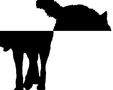
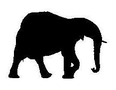
Baker2022fragmented-accuracy_delta
v1
[reference]
rank 179
|
|
|
716 images 







|
||
| .028 |
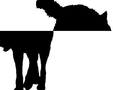
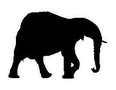
Baker2022frankenstein-accuracy_delta
v1
[reference]
rank 173
|
|
|
716 images 







|
||
| .068 |
BMD2024
rank 213
4 benchmarks |
|
| .126 |
BMD2024.dotted_2Behavioral-accuracy_distance
v1
rank 135
|
|
|
100 images 


|
||
| .147 |
BMD2024.texture_2Behavioral-accuracy_distance
v1
rank 151
|
|
|
100 images 


|
||
| .253 |
Hebart2023-match
v1
rank 164
|
|
|
1854 images 


|
||
| .461 |
Maniquet2024
rank 206
2 benchmarks |
|
| .440 |
Maniquet2024-confusion_similarity
v1
[reference]
rank 178
|
|
|
13600 images 


|
||
| .483 |
Maniquet2024-tasks_consistency
v1
[reference]
rank 238
|
|
|
13600 images 


|
||
| .109 |
Coggan2024_behavior-ConditionWiseAccuracySimilarity
v1
rank 200
|
|
|
22560 images 


|
||
How to use
from brainscore_vision import load_model
model = load_model("vonealexnet")
model.start_task(...)
model.start_recording(...)
model.look_at(...)
Brain Encoding Response Generator (BERG)
Through the BERG you can easily generate neural responses to images of your choice using any Brain-Score vision model.
For more information on how to use BERG, see the documentation and tutorial.
Historical Trend
Hover the line for a preview; click the chart to pin that month in the sidebar. While pinned, hover does not change it -- use Release or Esc to clear.
Benchmarks bibtex
@article{allen_massive_2022,
    title = {A massive 7T fMRI dataset to bridge cognitive neuroscience and artificial intelligence},
    volume = {25},
    issn = {1097-6256},
    doi = {10.1038/s41593-021-00962-x},
    journal = {Nature Neuroscience},
    author = {Allen, Emily J. and St-Yves, Ghislain and Wu, Yihan and Breedlove, Jesse L.
              and Prince, Jacob S. and Dowdle, Logan T. and Nau, Matthias and Caron, Brad
              and Pestilli, Franco and Charest, Ian and Hutchinson, J. Benjamin
              and Naselaris, Thomas and Kay, Kendrick},
    year = {2022},
    pages = {116--126},
}
        @Article{Freeman2013,
                author={Freeman, Jeremy
                and Ziemba, Corey M.
                and Heeger, David J.
                and Simoncelli, Eero P.
                and Movshon, J. Anthony},
                title={A functional and perceptual signature of the second visual area in primates},
                journal={Nature Neuroscience},
                year={2013},
                month={Jul},
                day={01},
                volume={16},
                number={7},
                pages={974-981},
                abstract={The authors examined neuronal responses in V1 and V2 to synthetic texture stimuli that replicate higher-order statistical dependencies found in natural images. V2, but not V1, responded differentially to these textures, in both macaque (single neurons) and human (fMRI). Human detection of naturalistic structure in the same images was predicted by V2 responses, suggesting a role for V2 in representing natural image structure.},
                issn={1546-1726},
                doi={10.1038/nn.3402},
                url={https://doi.org/10.1038/nn.3402}
                }
        @inproceedings{santurkar2019computer,
    title={Computer Vision with a Single (Robust) Classifier},
    author={Shibani Santurkar and Dimitris Tsipras and Brandon Tran and Andrew Ilyas and Logan Engstrom and Aleksander Madry},
    booktitle={ArXiv preprint arXiv:1906.09453},
    year={2019}
}
        @inproceedings{zerbe_laion-fmri_2026,
      title = {{LAION}-{fMRI}: A densely sampled 7T-fMRI dataset providing broad coverage of natural image diversity},
      author = {Zerbe, Josefine and Roth, Johannes and Mell, Maggie Mae and Herholz, Peer and Knapen, Tomas and Hebart, Martin N.},
      year = {2026},
      booktitle = {Vision Sciences Society Annual Meeting},
  }
        @misc{Sanghavi_DiCarlo_2021,
  title={Sanghavi2020},
  url={osf.io/chwdk},
  DOI={10.17605/OSF.IO/CHWDK},
  publisher={OSF},
  author={Sanghavi, Sachi and DiCarlo, James J},
  year={2021},
  month={Nov}
}
        @misc{Sanghavi_Murty_DiCarlo_2021,
  title={SanghaviMurty2020},
  url={osf.io/fchme},
  DOI={10.17605/OSF.IO/FCHME},
  publisher={OSF},
  author={Sanghavi, Sachi and Murty, N A R and DiCarlo, James J},
  year={2021},
  month={Nov}
}
        @article {Rajalingham240614,
                author = {Rajalingham, Rishi and Issa, Elias B. and Bashivan, Pouya and Kar, Kohitij and Schmidt, Kailyn and DiCarlo, James J.},
                title = {Large-scale, high-resolution comparison of the core visual object recognition behavior of humans, monkeys, and state-of-the-art deep artificial neural networks},
                elocation-id = {240614},
                year = {2018},
                doi = {10.1101/240614},
                publisher = {Cold Spring Harbor Laboratory},
                abstract = {Primates{	extemdash}including humans{	extemdash}can typically recognize objects in visual images at a glance even in the face of naturally occurring identity-preserving image transformations (e.g. changes in viewpoint). A primary neuroscience goal is to uncover neuron-level mechanistic models that quantitatively explain this behavior by predicting primate performance for each and every image. Here, we applied this stringent behavioral prediction test to the leading mechanistic models of primate vision (specifically, deep, convolutional, artificial neural networks; ANNs) by directly comparing their behavioral signatures against those of humans and rhesus macaque monkeys. Using high-throughput data collection systems for human and monkey psychophysics, we collected over one million behavioral trials for 2400 images over 276 binary object discrimination tasks. Consistent with previous work, we observed that state-of-the-art deep, feed-forward convolutional ANNs trained for visual categorization (termed DCNNIC models) accurately predicted primate patterns of object-level confusion. However, when we examined behavioral performance for individual images within each object discrimination task, we found that all tested DCNNIC models were significantly non-predictive of primate performance, and that this prediction failure was not accounted for by simple image attributes, nor rescued by simple model modifications. These results show that current DCNNIC models cannot account for the image-level behavioral patterns of primates, and that new ANN models are needed to more precisely capture the neural mechanisms underlying primate object vision. To this end, large-scale, high-resolution primate behavioral benchmarks{	extemdash}such as those obtained here{	extemdash}could serve as direct guides for discovering such models.SIGNIFICANCE STATEMENT Recently, specific feed-forward deep convolutional artificial neural networks (ANNs) models have dramatically advanced our quantitative understanding of the neural mechanisms underlying primate core object recognition. In this work, we tested the limits of those ANNs by systematically comparing the behavioral responses of these models with the behavioral responses of humans and monkeys, at the resolution of individual images. Using these high-resolution metrics, we found that all tested ANN models significantly diverged from primate behavior. Going forward, these high-resolution, large-scale primate behavioral benchmarks could serve as direct guides for discovering better ANN models of the primate visual system.},
                URL = {https://www.biorxiv.org/content/early/2018/02/12/240614},
                eprint = {https://www.biorxiv.org/content/early/2018/02/12/240614.full.pdf},
                journal = {bioRxiv}
            }
        @article{geirhos2021partial,
              title={Partial success in closing the gap between human and machine vision},
              author={Geirhos, Robert and Narayanappa, Kantharaju and Mitzkus, Benjamin and Thieringer, Tizian and Bethge, Matthias and Wichmann, Felix A and Brendel, Wieland},
              journal={Advances in Neural Information Processing Systems},
              volume={34},
              year={2021},
              url={https://openreview.net/forum?id=QkljT4mrfs}
        }
        @article{BAKER2022104913,
                title = {Deep learning models fail to capture the configural nature of human shape perception},
                journal = {iScience},
                volume = {25},
                number = {9},
                pages = {104913},
                year = {2022},
                issn = {2589-0042},
                doi = {https://doi.org/10.1016/j.isci.2022.104913},
                url = {https://www.sciencedirect.com/science/article/pii/S2589004222011853},
                author = {Nicholas Baker and James H. Elder},
                keywords = {Biological sciences, Neuroscience, Sensory neuroscience},
                abstract = {Summary
                A hallmark of human object perception is sensitivity to the holistic configuration of the local shape features of an object. Deep convolutional neural networks (DCNNs) are currently the dominant models for object recognition processing in the visual cortex, but do they capture this configural sensitivity? To answer this question, we employed a dataset of animal silhouettes and created a variant of this dataset that disrupts the configuration of each object while preserving local features. While human performance was impacted by this manipulation, DCNN performance was not, indicating insensitivity to object configuration. Modifications to training and architecture to make networks more brain-like did not lead to configural processing, and none of the networks were able to accurately predict trial-by-trial human object judgements. We speculate that to match human configural sensitivity, networks must be trained to solve a broader range of object tasks beyond category recognition.}
        }
        @article {Maniquet2024.04.02.587669,
	author = {Maniquet, Tim and de Beeck, Hans Op and Costantino, Andrea Ivan},
	title = {Recurrent issues with deep neural network models of visual recognition},
	elocation-id = {2024.04.02.587669},
	year = {2024},
	doi = {10.1101/2024.04.02.587669},
	publisher = {Cold Spring Harbor Laboratory},
	URL = {https://www.biorxiv.org/content/early/2024/04/10/2024.04.02.587669},
	eprint = {https://www.biorxiv.org/content/early/2024/04/10/2024.04.02.587669.full.pdf},
	journal = {bioRxiv}
}